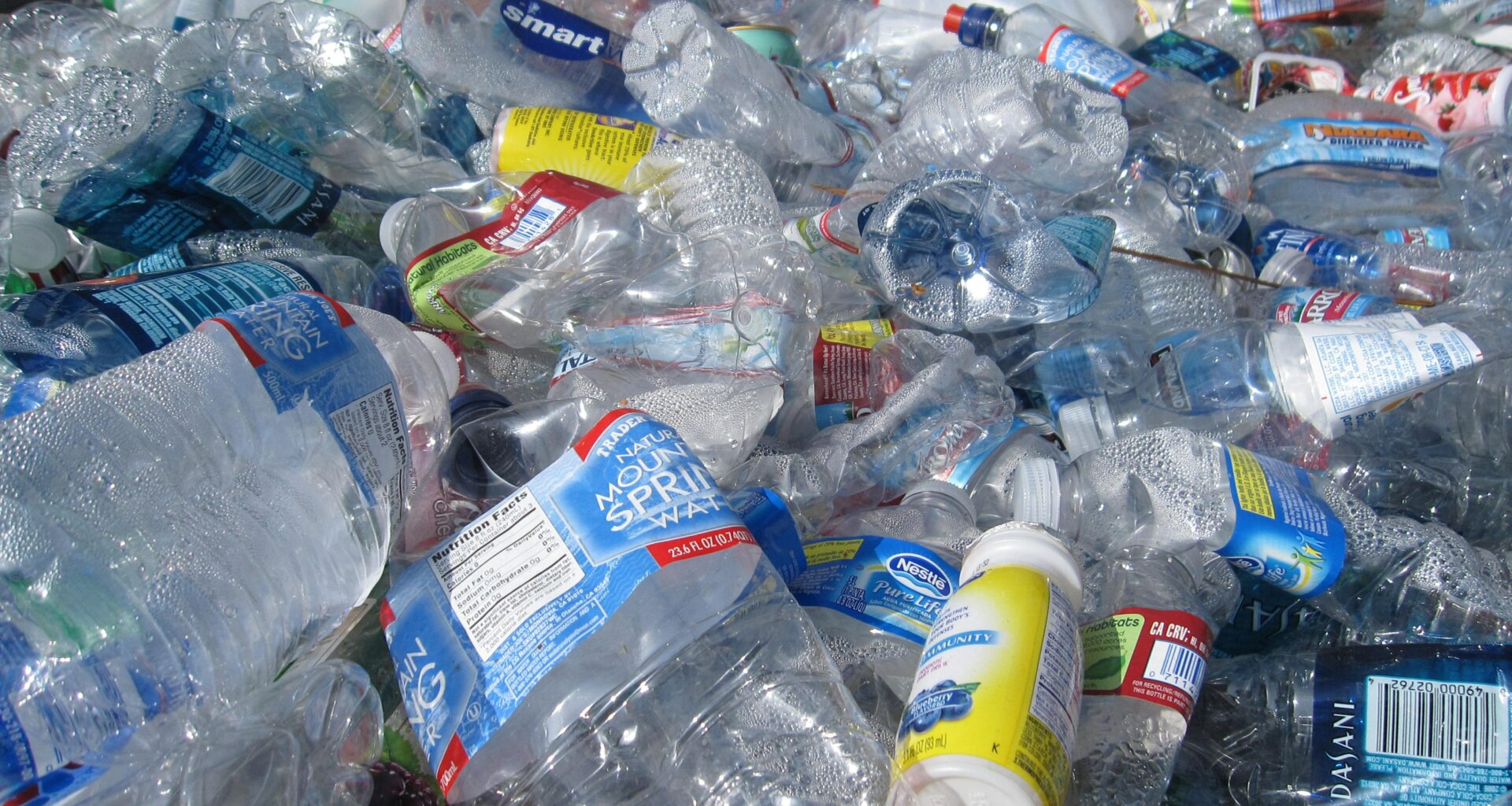

Aduro Clean Technologies (Nasdaq: ADUR) (TSX: ACT) (FSE: 9D5) announced a memorandum of understanding with Ortessa Groep BV to collaborate on the development of a plastic waste feedstock logistics center. As Aduro designs and builds its industrial scale pilot plant, located on the Brightlands Chemelot Industrial Park in the Netherlands, the goal is to demonstrate the commercial viability of its groundbreaking Hydrochemolytic™ platform technology for the recycling of mixed plastic waste.
Ortessa looks almost purpose-built to solve one of the harder problems in scaling plastics chemical recycling for Aduro: getting the right plastic, in the right condition, in the right place, every single day. Aduro’s First-Of-A-Kind (FOAK) industrial‑scale plant at Brightlands needs a feedstock partner that lives and breathes waste logistics, understands plastics at a granular level, and already operates in Aduro’s backyard. That is essentially Ortessa’s profile.
What Ortessa Provides
As a group of specialized waste companies, Ortessa is active across the full value chain of collection, sorting, processing and valorization. They are not just a hauler; they are an integrated platform that turns heterogeneous “waste” streams into more predictable, higher‑value flows. That matters enormously for a process like Aduro’s, which can unlock value from mixed and lower‑quality plastic but still needs basic parameters to be consistent: polymer types within agreed ranges, moisture and contamination under control, and enough homogeneity that plant operations aren’t constantly battling variability. Ortessa’s existing operations in the Netherlands, Belgium and Germany give it access to a broad basin of commercial and industrial plastic waste along with the infrastructure to consolidate, pre‑treat and move that material at scale.
Just as important is the fact that Ortessa already has one foot firmly planted in advanced plastics recycling, not just traditional waste management. Its investment in Blue Plastics, an innovative recycler, and its role as feedstock supplier for that venture demonstrate that Ortessa is already doing exactly the kind of work Aduro needs: designing collection schemes to target specific plastic fractions, implementing washing and pre‑treatment flows, and building quality‑assurance systems that satisfy demanding technology partners. That experience compresses Aduro’s learning curve. Instead of trying to vertically integrate into waste, Aduro can plug into a partner that is already configuring streams for other advanced recyclers on the same campus.
Digitalization is another under‑the‑radar edge. Ortessa has invested heavily in routing, data capture and process automation to replace manual and paper‑based systems. For investors, that means a partner capable of tracking volumes, yields and quality metrics in a way that supports stable offtake and supply contracts. It also allows Ortessa and Aduro to co‑develop transparent feedstock specifications and performance KPIs, which will be critical as the plant scales and seeks additional financing or long‑term agreements with petrochemical customers who will expect robust traceability.
All of this sits on top of cultural alignment. Ortessa’s positioning is explicitly about seeing “opportunities” where others see waste, and building circular models rather than just disposing of material. Aduro’s technology is a direct expression of that same philosophy. In practical terms, this alignment makes it easier to co‑invest in infrastructure, to work together through early‑stage hiccups, and to present a unified story to regulators, municipalities and corporate partners: one where collection and conversion are being designed together as a single circular system, rather than bolted together after the fact.
The Fit with the Netherlands
Turning to geography and regulation, the Netherlands might be one of the most attractive jurisdictions in Europe for Aduro to deploy its technology, and Brightlands Chemelot Campus is an especially compelling node within that landscape. The country has positioned itself as a frontrunner in circularity, with national targets for drastically higher recycling rates, reduced landfill and incineration, and, increasingly, mandatory recycled content in packaging. These goals are backed by tangible instruments: extended producer responsibility schemes, rising levies on incineration, and public funding directed at demonstration and scale‑up facilities for circular plastics. Brightlands itself is at the center of a major public‑private push in this space, with dedicated funding flowing into new demonstration infrastructure meant to de‑risk next‑generation recycling technologies.
For Aduro, that policy and funding backdrop matters in several ways. It increases the likelihood of grant support or soft‑funding for FOAK infrastructure, which can significantly improve project economics and lower equity dilution. It also creates structural demand for advanced recycling outputs as brand owners and resin producers look for ways to meet their regulatory obligations without sacrificing performance. Locating at Brightlands places Aduro within a dense petrochemical corridor, close to both plastic waste sources and potential offtakers, reducing logistics issues on both the input and output sides.
Equally important, the regulatory and societal environment in the Netherlands tends to favor solutions that demonstrate genuine circularity and measurable environmental benefit. Aduro’s process, which targets difficult‑to‑recycle streams and aims to produce high‑quality outputs with a smaller carbon footprint than virgin alternatives, fits that narrative well. Being able to show that feedstock is sourced through a sophisticated, regionally embedded partner like Ortessa, and processed in a jurisdiction with stringent oversight, enhances Aduro’s credibility with regulators and customers alike.
The Upshot
For investors, this combination of strong local policy alignment, a cluster rich in partners and talent, and a feedstock partner that materially de-risks the upstream side of the equation makes Aduro’s Brightlands strategy look very smart. In a FOAK project, execution risk is everything, and Ortessa helps address one of the biggest variables: reliable access to suitable plastic waste. That does not eliminate scale-up risk, but it does mean Aduro is not trying to solve feedstock, logistics, regulation, and technology commercialization all at once. Instead, it is entering a market that already wants circular plastics solutions, in a jurisdiction built to support them, with a partner that can help turn a promising process into an operable business.
Author’s Disclosure: This article reflects the author’s independent analysis and personal views. The content is provided for informational purposes only and should not be considered financial or investment advice. Readers are encouraged to conduct their own independent research and due diligence before making any investment decisions.
image sources
- tanvi-sharma–4bD2p5zbdA-unsplash: Photo by tanvi sharma on Unsplash