
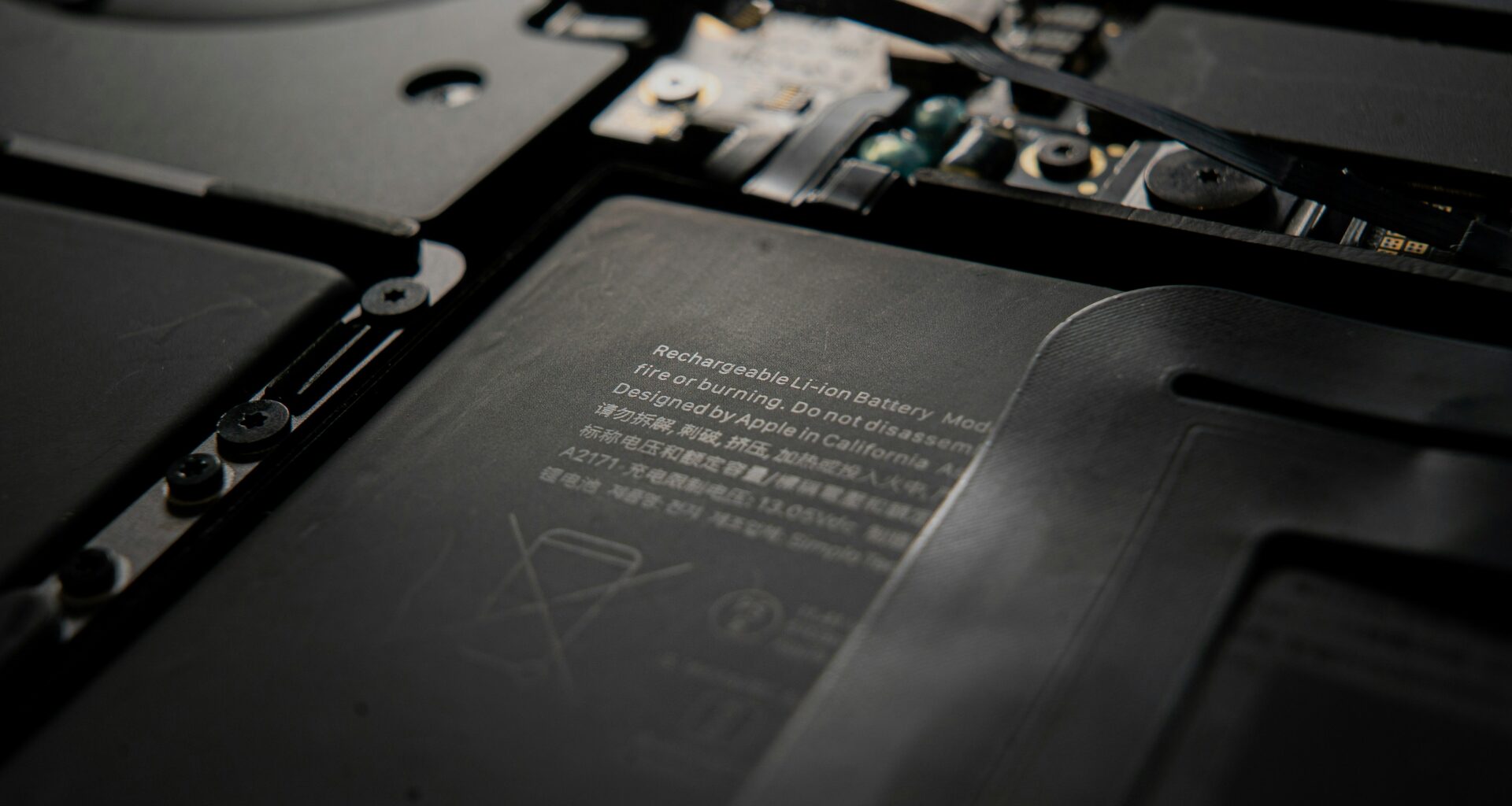

When investors discuss battery minerals, lithium usually gets most of the attention. But every conventional lithium-ion battery also needs an anode, and graphite remains the dominant material used to make it. That makes graphite essential to electric vehicles, grid-scale energy storage, consumer electronics and the rapidly growing power needs of data centers.
Its importance extends well beyond batteries. Graphite’s combination of electrical conductivity, heat resistance, chemical stability and lubricity makes it useful in steelmaking, refractories, motor brushes, brake linings, high-temperature lubricants, fuel cells and some nuclear and aerospace applications.
The United States has a problem: it does not currently mine any natural graphite. In 2025, the country remained 100% net import-reliant, importing an estimated 79,000 tonnes. China produced about 82% of the world’s natural graphite that year and also dominates battery-anode manufacturing.
Graphite One (TSXV: GPH) (OTCQX: GPHOF) has a vertically integrated plan to address what amounts to a national security issue. If it succeeds, the company could help fill one of the largest gaps in America’s critical-minerals supply chain. Its strategy begins not at its world-class Graphite Creek deposit in Alaska, but at a proposed active anode material, or AAM, manufacturing plant in Conneaut, Ohio. The mine could potentially be in full production by late 2030, while the anode materials facility is targeted for commissioning in Q4 2028. Both schedules are subject to permitting and financing.
Ohio Comes First
Graphite One secured access to the Conneaut industrial site in May 2026 through an agreement with a subsidiary of Canadian National Railway. The location offers direct rail service, access to Lake Erie and the Great Lakes shipping network, existing power infrastructure including an on-site substation, and room for future expansion.
The Ohio project is designed to develop in phases. The initial operation would provide approximately 10,000 tonnes per year of finishing, coating and blending capacity, with completion targeted for the fourth quarter of 2028. Graphite One plans to tailor that output for three markets: 4,000 tonnes for energy storage, 3,000 tonnes for fast-charging applications and 3,000 tonnes for high-energy-density applications.
A second phase would add high-temperature graphitization equipment and increase synthetic-graphite capacity to 25,000 tonnes annually. Graphite One currently targets the fourth quarter of 2030 for that expansion.
Graphite One would initially purchase graphitized synthetic feedstock and perform the final coating, blending and finishing steps in Ohio. Building the downstream plant first would allow Graphite One to enter the market, establish operating experience and qualify products with battery customers while the longer permitting and construction process continues in Alaska. The company has already delivered commercial-grade samples of up to 20 kilograms to three electric-vehicle manufacturers and three battery companies and is in discussions regarding potential offtake agreements.
Ohio regulators have accepted Graphite One’s air-permit application as administratively complete and begun technical review. The proposed 2028 startup remains conditional on permitting, financing, equipment procurement, power arrangements and other development requirements.
More Than an EV Story
The investment case for domestic graphite production is much broader than electric vehicles and commercial energy storage. Graphite also has direct national-security relevance. It is used in military batteries, lightweight armor, aerospace components and high-temperature industrial systems. In 2023, the U.S. Department of Defense awarded Graphite One’s Alaska subsidiary $37.5 million under Defense Production Act Title III to accelerate its feasibility study and expand domestic graphite-anode capacity. The department classified graphite battery anodes as an essential national-defense technology item.
The vulnerability is not simply that the United States imports graphite. It is that mining, purification, shaping, coating and anode manufacturing are heavily concentrated outside the country, particularly in China. Supply disruptions could come from export controls or geopolitical conflict, but also from tariffs, shipping interruptions, price competition or a foreign producer prioritizing its domestic customers.
In recognition of the broader supply/demand/security issues, and acknowledging the critical uses of graphite beyond EV batteries, Graphite One has created the G1 Advanced Systems Division within the company. Anthony Huston, CEO of Graphite One, stated, “This new division will focus on expanding the applications for Graphite One’s planned domestic graphite supply chain beyond battery and energy storage systems. It stems from our recognition that graphite and graphene are transformational materials in evolving technologies relevant to the energy/defense/national security and space sectors.”
America is not starting from absolute zero. Syrah Resources operates an 11,250-tonne-per-year natural-graphite AAM facility in Vidalia, Louisiana. More than ⅔ of that production is pledged to Tesla. Still, U.S. commercial capacity remains miniscule relative to increasing demand, and the country has no operating natural-graphite mine.
Graphite One therefore represents something more ambitious than another proposed factory. Management’s ultimate goal is to connect U.S. mining, graphite processing, advanced-material manufacturing and eventually recycling within a domestic system.
Alaska Supplies the Future
The upstream anchor is Graphite Creek, located approximately 55 kilometers north of Nome on Alaska’s Seward Peninsula. The U.S. Geological Survey has identified it as the country’s largest known natural-graphite deposit.
Graphite One’s 2025 feasibility study outlined Proven and Probable reserves of 71.2 million tonnes grading approximately 5.22% graphitic carbon. The proposed mine would produce an average of 175,000 tonnes of graphite concentrate annually over a projected 20-year life. Compare that to the approximately 79,000 tonnes imported by the U.S. in 2025 and you get a sense of the scale of the project.
If Graphite Creek proceeds, its concentrate could ultimately feed a natural-graphite processing operation associated with the Ohio manufacturing complex. That would turn Graphite One from a buyer of synthetic feedstock into a vertically integrated producer with a domestic raw-material source.
This is an important part of the strategy. Mining graphite captures only the first step in the value chain. Battery-grade material must be purified, shaped into spherical particles, coated and manufactured to demanding customer specifications. The proposed Ohio operation is the bridge between a mineral deposit and a product that manufacturers can actually use.
The Upshot
Graphite One offers investors exposure to two related opportunities. The Ohio plant could provide a faster route into the battery-materials market, while Graphite Creek supplies the longer-term resource scale and vertical integration. Starting in Ohio may also help the company qualify products and establish customers before the mine begins production.
The strategic logic is compelling. The United States wants more domestic battery manufacturing, but that effort remains exposed if the essential materials inside those batteries must still come from geopolitical competitors. Graphite One is attempting to solve both sides of the problem: make anode material in Ohio now, then supply it from Alaska later.
With the United States still fully reliant on imported natural graphite, Graphite One is addressing a vulnerability that is difficult to ignore – and one that reaches far beyond the electric-vehicle market.
Disclaimer: TDM Financial has prepared this editorial for general information purposes only and should not be considered a solicitation to buy or sell securities in the companies discussed herein. The information provided has been derived from sources believed to be reliable but cannot be guaranteed. This editorial does not take into account the readers investment criteria, investment expertise, financial condition, or financial goals of individual recipients and other concerns such as jurisdictional and/or legal restrictions that may exist for certain persons. Recipients should rely on their own due diligence and seek their own professional advice before investing. TDM Financial has received compensation from Graphite One Inc. in connection with the preparation and distribution of this editorial.