


Few molecules in pharmaceutical history have grown as fast as tirzepatide. Eli Lilly’s dual GIP/GLP-1 receptor agonist, sold as Mounjaro for type 2 diabetes and Zepbound for obesity, generated $27.7 billion in combined revenue in just the first half of 2026, an 88% year-over-year jump, and now accounts for nearly 65% of Lilly’s total sales. Against that backdrop, The Precision Peptide Company (CSE: BPC) (OTCQB: PNGAF) announced last week that it’s developing a needle-free, transdermal tirzepatide patch, positioning itself to compete not for a niche market, but for a piece of what may be the single largest drug franchise on the planet.
Why a Patch Beats a Needle
Every currently marketed tirzepatide product requires a weekly subcutaneous injection and refrigerated storage between 2°C and 8°C, creating real friction for patients and the broader supply chain. Precision Peptide’s patch is designed to eliminate both problems at once, delivering the drug through the skin without injection while targeting room-temperature stability that removes the cold-chain requirement entirely for patients, pharmacies, and distributors. That may sound like a convenience upgrade, but the practical implications are larger than they first appear.
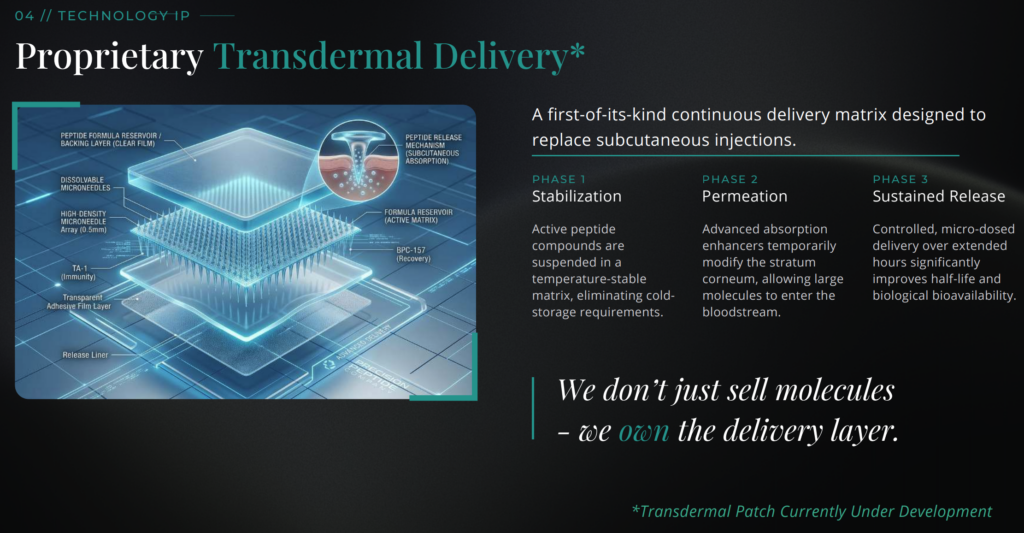
No refrigeration means no specialized shipping, no sharps disposal, and none of the anxiety many patients report around self-injecting a needle every week. It also means the product becomes genuinely travel-friendly, something injectable GLP-1 drugs, with their cold-packs and syringe kits, have never managed to be. For a drug class already facing documented adherence and discontinuation issues tied to injection fatigue and side effect management, a patch format directly targets one of the biggest behavioral barriers standing between patients and long-term treatment success.
A Two-Front Disease Opportunity
Tirzepatide’s commercial power comes from the fact that it isn’t chasing one disease state, it’s chasing two of the largest chronic disease markets in the world simultaneously. As a dual GIP/GLP-1 receptor agonist, it activates two separate metabolic receptor pathways involved in blood sugar regulation, appetite suppression, and energy balance. It was originally approved for type 2 diabetes management under the Mounjaro brand and has since become one of the most in-demand obesity and chronic weight management treatments under the Zepbound brand, with some regulatory approvals abroad now extending into moderate-to-severe obstructive sleep apnea as well.
That dual-indication structure is precisely why the category has scaled so quickly: Mounjaro alone generated $9.9 billion in Lilly’s second quarter of 2026, up 91% year-over-year, while Zepbound added another $4.9 billion, up 46%. The overall global GLP-1 market is estimated at $62 to $66 billion in 2025 and is growing quickly, driven largely by obesity treatment overtaking diabetes as the primary growth engine.
Why US Manufacturing Matters Here
Precision Peptide has stated that all development and intended manufacturing of the tirzepatide patch will occur in the United States, in compliance with applicable FDA regulatory standards. That detail carries more weight than it might first appear to a casual investor. In a therapeutic category this valuable, sourcing and supply chain integrity are under intense regulatory and public scrutiny, particularly as compounded and off-brand GLP-1 products have drawn FDA attention over quality and safety concerns in recent years.
A domestically developed and manufactured product gives Precision Peptide a credibility and compliance advantage that offshore or loosely regulated compounding operations simply can’t match, and it dovetails with the company’s broader strategy of building a fully vertically integrated, 503A-compliant, U.S.-based peptide platform rather than relying on imported or unregulated supply. If the patch technology performs as intended, that domestic manufacturing base could become a genuine differentiator in how prescribers, pharmacies, and regulators view the product relative to competitors sourcing internationally.
The Reality Check
None of this changes the fact that this is a development-stage product, not an approved one, with no FDA approval timeline currently disclosed. Transdermal delivery of a peptide as complex as tirzepatide is a genuine technical challenge; peptides are large molecules that don’t cross skin barriers easily, which is exactly why almost the entire GLP-1 category remains injectable today despite years of industry-wide effort to solve this problem. Investors should treat this as a high-optionality, early-stage bet rather than a near-term revenue driver, and the company has offered no specific timeline for clinical validation or regulatory submission.
Still, the strategic logic is hard to ignore. Precision Peptide isn’t trying to carve out a small niche adjacent to a giant market, it’s aiming directly at the delivery-format bottleneck sitting at the center of the fastest-growing drug category in the industry. The company has already developed a needle-free patch that effectively delivers BPC-157, a peptide aimed at physical recovery. If the technology works for tirzepatide, and that remains a real if, the addressable opportunity isn’t measured in the tens of millions of dollars typical of a small-cap peptide company. It’s measured against a global market that’s already worth over $60 billion and growing at a pace few other therapeutic categories can match.
Author’s Disclosure: This article reflects the author’s independent analysis and is provided for informational purposes only and should not be considered financial or investment advice. Readers are encouraged to conduct their own independent research and due diligence before making any investment decisions.