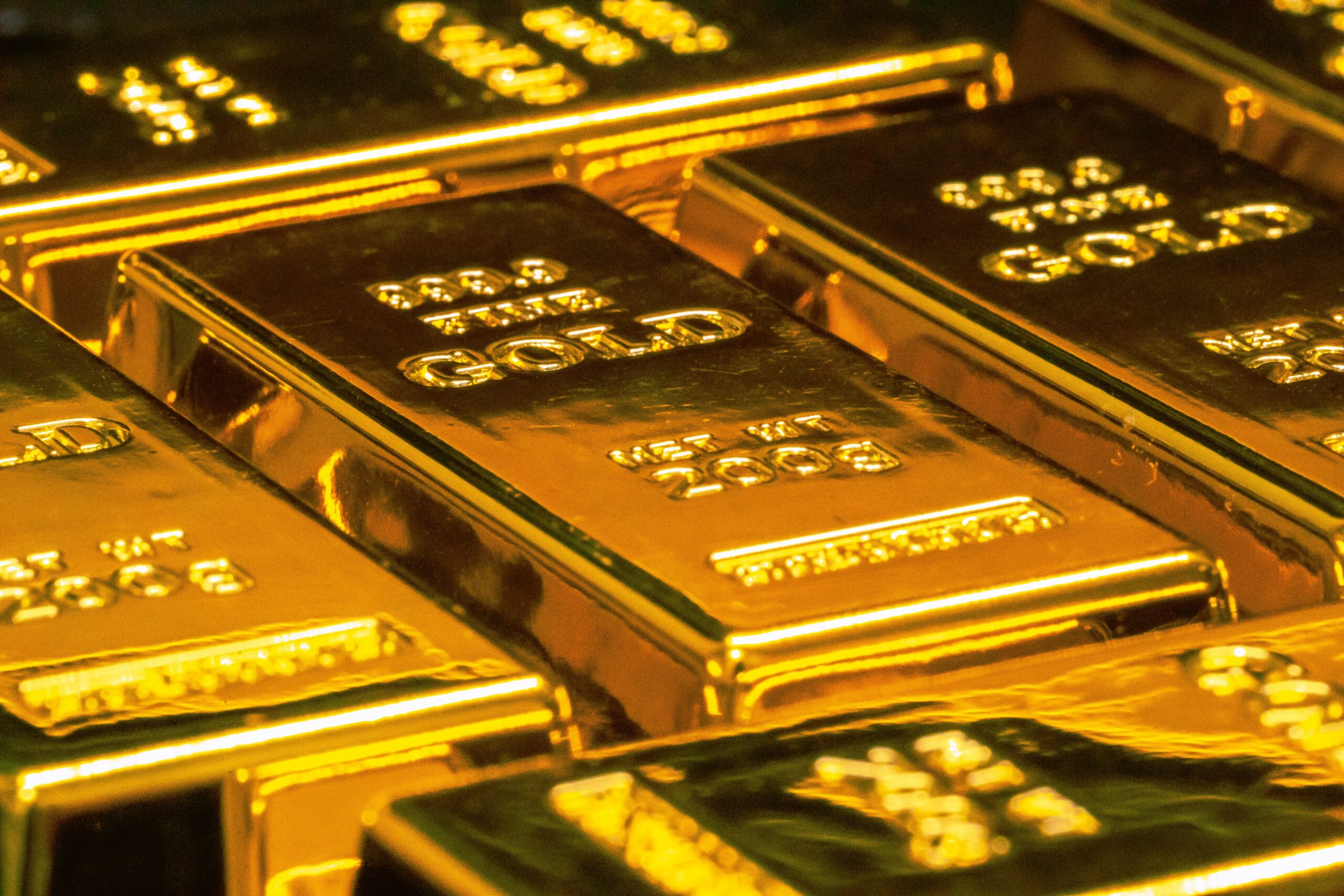
Gold has always been easy to caricature. It produces no cash flow, pays no dividend and spends most of its existence sitting in vaults. Yet every few years the financial system rediscovers why central banks, institutions and private investors continue to assign considerable value to an inert metal. The latest recovery is another such moment. Over the past two years gold has climbed from about $2,000 to the $4,000 range, hitting highs above $5,300 earlier this year.
What has changed is not gold itself but the economic system around it. Government debt is larger, central banks are buying more bullion, institutional investors have become more comfortable holding it through exchange-traded funds, and the supply of newly mined gold responds only slowly to higher prices. The result is a market increasingly shaped by structural demand rather than occasional bouts of financial panic.
A Different Kind of Monetary Asset
Gold’s traditional appeal rests partly on what it lacks. There is no issuer whose balance sheet can deteriorate, no government capable of printing more of it and no coupon whose value depends on a central bank’s next decision.
Those characteristics become more interesting when the alternatives appear less straightforward. Rising government debt, persistent inflation risks and greater geopolitical fragmentation have encouraged reserve managers to think more carefully about diversification. Gold does not need to replace currencies or sovereign bonds to benefit from that shift; it merely needs to command a slightly larger share of enormous institutional portfolios.
That process is already visible. Central banks and other official institutions purchased an estimated 321 tonnes of gold in the third quarter of 2026, according to the World Gold Council, an increase of 42% from a year earlier and the strongest quarterly total since late 2024. Purchases during the first nine months of the year reached 675 tonnes, running ahead of the same period in 2025.
This is not the behaviour of investors chasing a weekly chart. Central banks typically move slowly, and their decisions reflect questions of reserve management, currency exposure and financial resilience that unfold over years rather than trading sessions.
Gold has therefore acquired a broader constituency. It remains a hedge against acute uncertainty, but it is increasingly also being treated as a strategic reserve asset.
Institutional Demand Is Becoming Harder to Ignore
The other important change is taking place in investment markets.
Gold-backed exchange-traded funds added 211 tonnes during the third quarter, reversing the outflows seen in the previous quarter and pushing global ETF holdings to a record 4,256 tonnes. The value of total gold demand during the quarter reached approximately $188 billion, while year-to-date demand remained close to the record level established in 2025.
ETFs have made gold considerably easier for institutional capital to own. Investors no longer need to arrange physical storage or trade futures contracts to obtain direct exposure to the metal, allowing portfolio allocations to change more quickly when macroeconomic conditions shift.
The motivations behind those flows are also revealing. Fiscal sustainability, inflation risk and geopolitical uncertainty have joined conventional interest-rate considerations as reasons to hold gold. These forces can operate simultaneously, making the metal less dependent on any single economic forecast.
Higher interest rates can still weigh on demand because gold offers no yield. A stronger dollar can make bullion more expensive for buyers elsewhere. Yet the market increasingly contains sources of demand that do not disappear simply because one of those traditional headwinds emerges.
Supply Is the Quiet Part of the Story
Demand receives most of the attention because it changes faster. Gold supply is more stubborn.
Mine production reached a third-quarter record of roughly 1,071 tonnes in 2026, up 3% from the previous year. Yet overall gold supply actually declined slightly as recycling fell, and the World Gold Council expects any further growth in mine production to remain relatively modest.
This reflects the inconvenient economics of mining. Higher commodity prices can make existing mines more profitable almost immediately, but they cannot create new deposits overnight. Discoveries need to be drilled, resources defined, engineering completed, permits obtained, financing arranged and infrastructure built before an ounce reaches the market. That sequence can take many years.
Gold therefore has a supply curve that responds slowly to price. Even when investors and central banks decide they want substantially more of it, the mining industry cannot simply increase production in the manner of a factory adding another shift.
This is where the economics of gold begin to influence the economics of mining.
Higher Gold Prices Change More Than Revenue
For established producers, a stronger gold price can improve margins relatively quickly. Companies such as Newmont, Barrick Mining and Agnico Eagle already possess producing mines, processing facilities, experienced workforces and large reserve bases, giving them direct exposure to changes in the value of each ounce produced.
Their importance to the market goes beyond sheer size. Large producers provide investors with liquid exposure to the operating economics of gold, and sustained commodity strength can support cash generation, dividends, reinvestment and future mine development.
But the effects of a strong gold environment eventually travel further upstream.
A gold price is also an assumption inside economic studies for mines that have not yet been built. When that assumption rises and remains elevated, undeveloped resources can become more compelling, financing discussions can improve and exploration budgets can become easier to justify.
This is one reason mining cycles often broaden. Capital tends to recognise existing production first because the economics are visible, while attention can later move toward developers and explorers whose resources may contribute to future supply.
Gold Is Becoming a Capital-Allocation Question
The emerging mining cycle therefore involves more than predicting tomorrow’s bullion price. It is increasingly about where capital should be deployed when existing mines are valuable, new discoveries are difficult and additional production takes years to bring online.
The industry faces a familiar problem. Large producers need to replenish the ounces they mine, yet major discoveries are neither frequent nor evenly distributed. Acquisitions can provide one route to replacement, while exploration and development provide another.
A sustained high-price environment can encourage both.
This is where the phrase “new economics” becomes useful. Gold at elevated prices changes the calculation across the entire chain, from operating mines to undeveloped deposits. It can increase the cash available to major producers while simultaneously improving the economic backdrop for companies attempting to define new resources.
The result is not simply a bullion rally. It is a potential reallocation of capital throughout the mining industry.
Copper Adds Another Layer
Gold is the immediate macro story, but it is not the only metal influencing mining investment.
Copper occupies a different part of the economic system. Its demand is tied more directly to electricity grids, data centers, transportation, industrial infrastructure and the continuing electrification of the global economy. New copper mines are similarly difficult to permit and build, making large gold-copper systems particularly relevant when capital begins looking for long-lived mineral resources.
The two metals therefore offer complementary exposures. Gold responds strongly to monetary, fiscal and geopolitical conditions, while copper is closely connected to physical infrastructure and industrial expansion. Projects containing both can participate in two distinct commodity narratives.
That is particularly relevant in regions where large porphyry systems have already demonstrated the ability to host both metals at meaningful scale.
Papua New Guinea and the Exploration End of the Cycle
Papua New Guinea is one such jurisdiction. The country hosts major gold and copper systems and has a long history of large-scale mining, making it an established geological setting for companies searching for additional resources.
South Pacific Metals (TSXV: SPMC; OTCQB: SPMEF) provides one example of how the exploration end of the market fits into the larger gold-and-copper cycle. The company controls four projects covering more than 3,100 square kilometres across three mineral districts in Papua New Guinea, with work underway across Kili Teke, Osena, Anga and May River.
Kili Teke gives the portfolio an existing resource base. The project hosts an NI 43-101 inferred mineral resource of 237 million tonnes grading 0.34% copper and 0.24 grams per tonne gold, containing approximately 802,000 tonnes of copper and 1.81 million ounces of gold, alongside molybdenum. The current resource is confined to the Central Main Porphyry, while historical drilling and newer exploration work have identified additional areas for follow-up.
Recent fieldwork has added to that geological picture. South Pacific Metals reported surface samples grading as high as 12.8% copper outside the existing Kili Teke resource, with massive sulphide mineralisation traced over more than 200 metres in one target area. The company has also assembled a ranked inventory of additional exploration targets using historical datasets, geophysics and newer analytical techniques.
These results do not turn an exploration project into a mine, nor is that the useful comparison. South Pacific Metals represents the stage at which the mining industry searches for, defines and advances the resources that could eventually become part of future supply.
In a stronger gold environment, that part of the cycle naturally becomes more relevant.
The Economics Extend Beneath the Ground
The current recovery in gold should be viewed in a wider context than the latest move in bullion.
The dollar and Treasury yields will continue to matter, as will Federal Reserve policy. Yet central-bank accumulation, record ETF holdings, fiscal concerns and constrained mine supply suggest that gold’s role in the financial system is being supported by forces that reach beyond any one interest-rate decision.
For producers, that environment can strengthen current economics. For the broader mining industry, it can also increase the value of replacing reserves and finding the deposits that may supply future production.
That is where gold and copper begin to meet.
One is increasingly being accumulated as a financial and reserve asset. The other is embedded in the infrastructure of an electrifying economy. Both are difficult to bring out of the ground quickly, and both require years of investment before a discovery becomes supply.
Companies such as South Pacific Metals sit near the beginning of that process. Their role is not to capture today’s commodity price through current production, but to explore and advance mineral systems that may matter further into the cycle.
Gold’s new economics are about considerably more than the price of an ounce. They are about how capital moves, how reserves are replaced and how the mining industry begins preparing today for the supply the world may need tomorrow.
Disclaimer: TDM Financial has prepared this editorial for general information purposes only and should not be considered a solicitation to buy or sell securities in the companies discussed herein. The information provided has been derived from sources believed to be reliable but cannot be guaranteed. This editorial does not take into account the readers investment criteria, investment expertise, financial condition, or financial goals of individual recipients and other concerns such as jurisdictional and/or legal restrictions that may exist for certain persons. Recipients should rely on their own due diligence and seek their own professional advice before investing. TDM Financial has received compensation from South Pacific Metals Corp. in connection with the preparation and distribution of this editorial.